.svg)
How Retatrutide Compares to Wegovy, Ozempic & Mounjaro: Real Study Data
Retatrutide shows 24.2% weight loss vs Wegovy's 14.9%. Complete clinical trial comparison of Retatrutide, Mounjaro, Ozempic & Wegovy with real 2025 data.
Introduction
The weight loss medication landscape is evolving rapidly. While medications like Wegovy, Ozempic, and Mounjaro have already transformed obesity treatment, a new contender called Retatrutide is showing unprecedented results in clinical trials. But how does it actually compare? Let's dive into the real study data.
Understanding the Medications
Before comparing results, it's important to understand what makes each medication unique:
Wegovy & Ozempic (Semaglutide)
- Mechanism: Single GLP-1 receptor agonist
- Dosing: Once weekly injection
- Wegovy: 2.4 mg (approved for weight loss)
- Ozempic: Up to 1 mg (approved for diabetes)
- How it works: Mimics the GLP-1 hormone to reduce appetite and slow stomach emptying
Mounjaro (Tirzepatide)
- Mechanism: Dual GIP/GLP-1 receptor agonist
- Dosing: Once weekly injection (5 mg, 10 mg, or 15 mg)
- Approved for: Type 2 diabetes, weight loss (as Zepbound)
- How it works: Targets both GIP and GLP-1 pathways for enhanced metabolic effects
Retatrutide (Investigational)
- Mechanism: Triple GIP/GLP-1/Glucagon receptor agonist
- Dosing: Once weekly injection (up to 12 mg in trials)
- Status: Phase 3 clinical trials (not yet FDA approved)
- How it works: Adds glucagon receptor activation to potentially enhance fat burning and metabolic benefits
Head-to-Head Weight Loss Results
Here's how each medication performed in major clinical trials:
Retatrutide: Leading the Pack
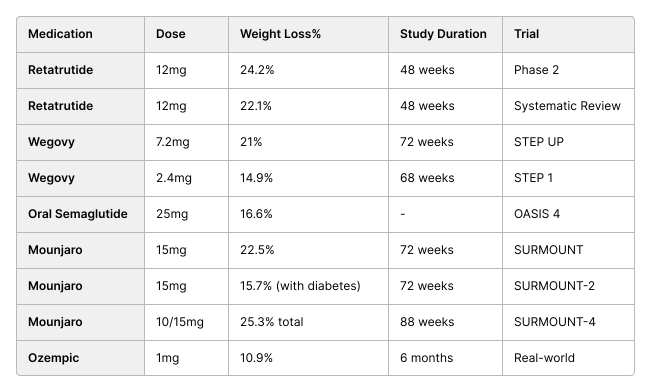
In phase 2 trials, participants treated with the highest dose of retatrutide (12 mg) achieved a mean weight reduction of 24.2%, translating to an average of 58 pounds over 48 weeks. Remarkably, at 24 weeks, retatrutide demonstrated weight reduction up to 17.5%.
A systematic review published in the Annals of Internal Medicine found that retatrutide led to 22.1% weight reduction after 48 weeks with the 12 mg weekly dose.
Real-world impact: Some trial participants reported losing up to 31% of body weight in just eight months, though this also raised concerns about managing such rapid weight loss.
Wegovy (Semaglutide 2.4 mg): The Current Gold Standard
The STEP 1 trial showed that participants taking Wegovy 2.4 mg achieved a mean change in body weight of -14.9% over 68 weeks, compared to -2.4% with placebo.
Latest developments: The investigational 7.2 mg dose of Wegovy achieved mean weight loss of 21% over 72 weeks in the STEP UP trial, with over 90% of participants achieving at least 5% weight loss, and one-third losing 25% or more.
Oral semaglutide 25 mg produced a 16.6% average weight loss, with one in three participants losing 20% or more of their body weight.
Ozempic (Semaglutide 1 mg): Diabetes-Focused
While Ozempic is primarily approved for type 2 diabetes at lower doses, it still produces significant weight loss, though less than the higher-dose Wegovy formulation. In real-world settings, patients achieved total body weight loss of 5.9% at 3 months and 10.9% at 6 months.
Mounjaro/Zepbound (Tirzepatide): Strong Contender
In the SURMOUNT-1 trial, tirzepatide provided substantial weight reductions at 72 weeks, with participants losing significant amounts of weight across all dose levels.
Higher doses of tirzepatide helped patients with obesity lose up to 22.5% of their body weight on average in late-stage studies.
In the SURMOUNT-2 trial for people with type 2 diabetes and obesity, tirzepatide achieved up to 15.7% weight loss (34.4 lb) at 72 weeks.
The SURMOUNT-4 trial showed participants who completed a 36-week lead-in period experienced a mean weight reduction of 20.9%, with overall mean weight reduction reaching 25.3% by week 88 for those continuing tirzepatide.
Comparative Overview: Weight Loss at Key Timepoints
Beyond Weight Loss: Metabolic Benefits
Retatrutide's Broader Impact
Treatment with retatrutide was associated with improvements in cardiometabolic measures including systolic and diastolic blood pressure, triglycerides, LDL-cholesterol, total cholesterol, HbA1c, and fasting glucose and insulin.
At the highest dose of retatrutide, more than 90% of participants with obesity and NAFLD achieved normalization of liver fat.
Tirzepatide's Cardiovascular Effects
Participants in the tirzepatide group showed improvements in waist circumference, blood pressure, A1c, glucose, insulin, and cholesterol levels.
Semaglutide's Heart Protection
Research suggests that semaglutide may protect the heart in ways beyond weight loss alone, with cardiovascular benefits potentially occurring even without significant weight loss.
Safety Profile: What to Expect
Common Side Effects (All Medications)
The most commonly reported side effects across all three medications are gastrointestinal:
- Nausea
- Diarrhea
- Vomiting
- Constipation
- Decreased appetite
These side effects are generally mild to moderate and diminish over time.
Retatrutide-Specific Concerns
Multiple trial participants experienced severe nausea and kidney stones, leading to dose reductions and self-modification of treatment schedules. Some participants also experienced excessive weight loss requiring careful dosing management.
Concerns about cardiovascular safety have emerged due to dose-dependent increases in heart rate and mild to moderate cardiac arrhythmias.
Important Considerations
The safety profile of retatrutide was similar to other incretin-based therapies, though longer-term safety data is still being collected in ongoing Phase 3 trials.
Who Achieves the Best Results?
Retatrutide
The 12 mg dosage showed the most significant reductions in body weight, BMI, and waist circumference, with a higher percentage of patients achieving weight losses of ≥5%, 10%, 15%, and 20%.
Wegovy
86% of participants who received semaglutide 2.4 mg attained at least a 5% reduction in total body weight.
Tirzepatide
Nearly 80% of participants achieved a body weight reduction of more than 5%, and nearly 40% saw a reduction of more than 15%.
Timeline to Results
Understanding when to expect results is crucial for setting realistic expectations:
- Early results (12-24 weeks): Retatrutide showed mean weight reduction up to 17.5% at 24 weeks
- Peak weight loss: Participants on Wegovy typically lost weight for about 65 weeks before reaching a plateau
- Long-term maintenance: The 10% average weight loss for people using Wegovy was sustained for up to 208 weeks (four years) while staying on medication
Current Availability & Future Outlook
What's Available Now
- Wegovy (semaglutide 2.4 mg): FDA approved for weight management
- Ozempic (semaglutide 1 mg): FDA approved for type 2 diabetes
- Mounjaro (tirzepatide): FDA approved for type 2 diabetes
- Zepbound (tirzepatide): FDA approved for weight management
What's Coming
The approval process for retatrutide by the US Food and Drug Administration is expected to take several years, with extensive phase 3 trials projected to continue through 2025.
Eli Lilly expects to provide results from a 68-week study in people with obesity and osteoarthritis of the knee in 2025, with the phase three study previously expected to finish in February 2026.
The Bottom Line: Which Is Best?
Based on current clinical trial data:
Most Weight Loss: Retatrutide shows the highest weight loss percentages (up to 24.2% at 48 weeks), though it's not yet approved and long-term safety data is still being collected.
Proven Track Record: Wegovy remains the gold standard with extensive safety data and FDA approval for weight management, achieving 14.9-21% weight loss depending on dose.
Best for Diabetes + Weight Loss: Mounjaro/Zepbound offers impressive dual benefits for both blood sugar control and weight management (15.7-22.5% weight loss).
Most Accessible: Ozempic, while approved for diabetes, is widely available and still produces meaningful weight loss (10-11% at 6 months).
Important Considerations
- All medications require continued use to maintain weight loss
- Individual results vary based on genetics, lifestyle, and adherence
- Cost and insurance coverage differ significantly
- Medical supervision is essential for all these medications
- Long-term safety data is still emerging for newer medications
The Future of Weight Loss Medicine
The triple agonism mechanism of retatrutide (combining glucagon receptor agonism with GIP and GLP-1 receptor agonism) may be one of the reasons for its exceptional weight reduction levels.
As research continues, we're likely to see:
- More head-to-head comparison trials
- Oral formulations becoming more common
- Combination therapies
- Personalized medication selection based on genetic profiles
- Improved side effect management strategies
Conclusion
The data is clear: we're entering a new era of obesity treatment where 20%+ weight loss is achievable with medication. Retatrutide shows the most promise on paper, but Wegovy and Mounjaro are already delivering impressive, proven results today.
The best medication for you depends on your individual health profile, whether you have type 2 diabetes, your tolerance for side effects, and access to these medications. Work closely with your healthcare provider to determine which option aligns best with your weight loss goals and overall health needs.
Note: This article is for informational purposes only and should not replace professional medical advice. All medications discussed should only be used under the supervision of a qualified healthcare provider. Retatrutide is investigational and not yet FDA approved.
Disclaimer: This article synthesizes data from peer-reviewed clinical trials and company-reported results. Individual results may vary. Always consult with a qualified healthcare provider before starting any weight loss medication.
Frequently Asked Questions
Based on current clinical trial data, Retatrutide demonstrates superior weight loss results compared to Wegovy. In phase 2 trials, Retatrutide achieved 24.2% average weight loss at 48 weeks with the 12 mg dose, while Wegovy 2.4 mg achieved 14.9% weight loss at 68 weeks. However, it's important to note that Retatrutide is still investigational and not yet FDA approved, while Wegovy has an established safety profile with years of real-world use. The "better" choice depends on individual factors including current availability, insurance coverage, tolerance for side effects, and whether you're willing to wait for FDA approval.
Retatrutide's FDA approval process is expected to take several years. Eli Lilly is currently conducting extensive phase 3 clinical trials, with results from a 68-week study in people with obesity and osteoarthritis expected in 2025. Earlier projections suggested a phase three study completion by February 2026, though timelines can shift. After trial completion, the FDA review process typically takes 10-12 months, meaning Retatrutide could potentially be available as early as 2026-2027, though this is not guaranteed. Patients interested in Retatrutide should monitor official announcements from Eli Lilly and the FDA for updates.
All four medications (Retatrutide, Wegovy, Ozempic, and Mounjaro) share similar gastrointestinal side effects because they work on related pathways. The most common side effects include nausea (affecting 20-40% of users), diarrhea, vomiting, constipation, and decreased appetite. These effects are typically most pronounced when starting treatment or increasing doses, and they generally diminish over time as your body adjusts. Retatrutide trials have reported additional concerns including kidney stones in some participants and dose-dependent increases in heart rate. Starting at lower doses and gradually titrating upward helps minimize side effects. If side effects become severe or persistent, consult your healthcare provider about dose adjustments or alternative options.
While switching between GLP-1 medications is medically possible and sometimes done, several factors need consideration. First, Retatrutide must receive FDA approval before it becomes a switching option. When it does become available, your healthcare provider will assess whether switching is appropriate based on your current results, tolerance of your existing medication, and specific health needs. Some patients switch medications if they've plateaued in weight loss, experience intolerable side effects, or aren't achieving their goals. However, switching requires careful medical supervision, including a transition period where the previous medication clears your system before starting the new one. Insurance coverage and cost will also be significant factors, as newer medications typically have higher costs and more limited insurance coverage initially.
Related Topics
Evidence-based articles to support your journey toward sustainable health.



Register your interest in Retatrutide
Retatrutide is currently not available, but once it is approved, you’ll be the first to get notified. Sign up now and stay informed.
Simple one-time sign-up
Early access to availability updates
Exclusive status among the first users
Advantage over non-registered users
%201.webp)