Summarize the article with AI
Does Retatrutide Cause Pancreatitis? The Short Answer
It is not known. In TRIUMPH-1, the largest Phase 3 trial of retatrutide with published results, an independent committee confirmed 10 cases of pancreatitis over 80 weeks: 1 (0.2%) on the 4 mg dose, 3 (0.5%) on 9 mg and 4 (0.7%) on 12 mg, against 2 (0.3%) on placebo. The investigators wrote that "these small event numbers do not permit conclusions regarding a treatment effect," and that more data will be needed from later trials.
- Pancreatic enzymes rose. On average, lipase was about 28% to 31% higher at week 80 than at the start on retatrutide, against 6% on placebo, and pancreatic amylase about 20% to 22% higher, against 5%. The averages stayed within the normal range.
- Other trials add little. The Phase 2 obesity trial had one case of acute pancreatitis, on 12 mg, and Lilly reports no cases in the 40-week TRANSCEND-T2D-1 trial. The company's announcements of the other Phase 3 trials report no pancreatitis results for retatrutide.
- People with a history of pancreatitis were excluded from TRIUMPH-1, TRANSCEND-T2D-1 and TRANSCEND-T2D-2, so the trials say nothing about them.
- The approved drugs closest to retatrutide, tirzepatide and semaglutide, carry a warning about acute pancreatitis on their US labels. Retatrutide has no label yet.
What Pancreatitis Is
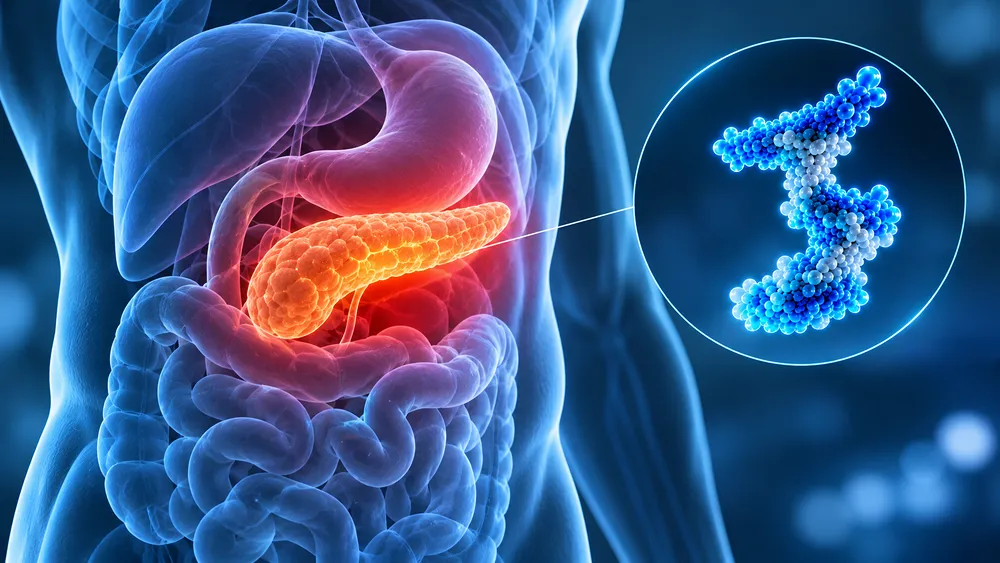
Pancreatitis is inflammation of the pancreas, the organ that makes digestive enzymes and hormones such as insulin. The US National Institute of Diabetes and Digestive and Kidney Diseases describes acute pancreatitis as a condition that "occurs suddenly and is a short-term condition," and chronic pancreatitis as long-lasting. It reports about 275,000 hospital stays for acute pancreatitis in the United States each year and names gallstones as the most common cause of acute pancreatitis; it lists heavy alcohol use, genetic disorders of the pancreas and some medicines among the most common causes of pancreatitis.
Pancreatitis became a question for retatrutide because semaglutide and tirzepatide, the approved drugs closest to it, carry a warning about it. Retatrutide acts on the GLP-1 receptor too, as well as on the GIP and glucagon receptors.
Pancreatitis in the TRIUMPH-1 Trial
TRIUMPH-1 randomized 2,339 adults with obesity or overweight and without diabetes to retatrutide 4 mg, 9 mg or 12 mg, or placebo, for 80 weeks. Suspected pancreatic events were sent to an independent clinical endpoint committee for adjudication. According to the paper's supplementary appendix, the events it reviewed included pancreatitis, raised pancreatic enzymes with symptoms or with further diagnostic follow-up, and severe or serious abdominal pain of unknown cause. The table shows the confirmed cases, along with two related categories from the paper.
The confirmed cases rose with the dose, from 0.2% on 4 mg to 0.7% on 12 mg, but the 4 mg rate was below the placebo rate, and the totals are small: a difference of one or two cases changes the picture. Because three of the four groups received retatrutide, the 8 cases on retatrutide against 2 on placebo come from about three times as many people, so the raw counts overstate the difference. The paper does not report how severe the cases were.
Gallstones, the most common cause of acute pancreatitis, are relevant here because semaglutide's label says substantial or rapid weight loss can increase the risk of gallstones, and both its label and tirzepatide's associate the drugs with more acute gallbladder disease. Severe or serious gallbladder or biliary disorders were most frequent on the lowest dose, 4 mg, and occurred at the same rate on 12 mg as on placebo. The paper and its appendix report only severe or serious gallbladder events, not milder ones.
Lipase and Amylase: What the Appendix Shows
Lipase and amylase are enzymes made by the pancreas, and their blood levels are used in diagnosing pancreatitis. The TRIUMPH-1 paper's supplementary appendix reports the average values at the start and at week 80.
Both enzymes rose by a similar amount on every dose, with no clear dose pattern. These are estimated averages, and at week 80 they were well within the normal ranges given in the appendix. Averages can hide individual results, however, and we found no figures in the paper or its appendix for how many participants had levels above the normal range or several times its upper limit.
Raised enzymes on their own are not pancreatitis. Tirzepatide's US label, which reports similar increases, says that "the clinical significance of elevations in amylase or lipase" with the drug "is unknown in the absence of other signs and symptoms of pancreatitis."
Pancreatitis in the Other Retatrutide Trials
The 48-week Phase 2 obesity trial, published in 2023 with 338 participants, reported one case of acute pancreatitis, in a participant on 12 mg. For TRANSCEND-T2D-1, a 40-week trial in 537 people with type 2 diabetes, Lilly's medical information page states that "there were no cases of" pancreatitis.
The company's announcements of TRIUMPH-2, TRIUMPH-3, TRIUMPH-4 and TRANSCEND-T2D-2 list the most common adverse events, and we found no pancreatitis results for retatrutide in them. That does not mean there were no cases: the announcements report common events, not rare ones, and the full results of those trials will give the figures.
TRIUMPH-1 excluded people with a history of acute or chronic pancreatitis, and so did TRANSCEND-T2D-1 and TRANSCEND-T2D-2, according to Lilly's medical information pages for those trials. How retatrutide affects people who have had pancreatitis before has therefore not been studied in these trials.
How Retatrutide Compares With Tirzepatide and Semaglutide
The US labels of tirzepatide and semaglutide report pancreatitis and enzyme changes from their weight-reduction trials. These are comparisons across separate trials of different lengths and populations, not head-to-head results.
On these figures, the rise in lipase and amylase on retatrutide was close to that on tirzepatide and broadly similar to that on semaglutide, which showed a larger rise in lipase and a smaller one in amylase. The pancreatitis figures are harder to compare: the labels report them in different ways, and all of them rest on a handful of cases. Tirzepatide's label also shows how much such figures can vary between trials. In its trials for a different use, pancreatitis was confirmed in 0.23 patients per 100 years of exposure, against 0.11 on comparators, and in its two sleep apnea trials, in 0.84 per 100 years, against none on placebo. The wider comparison of the three drugs is in retatrutide vs tirzepatide vs semaglutide.
What the Labels of Related Drugs Say
Retatrutide has not been approved, so it has no label and no official warnings. The labels of tirzepatide and semaglutide both state that acute pancreatitis, "including fatal and non-fatal hemorrhagic or necrotizing pancreatitis, has been observed" in patients treated with GLP-1 receptor agonists or with the drug itself. Both list it among their warnings and precautions. Whether a similar warning would apply to retatrutide would be decided in an FDA review.
What Is Still Unknown
- Whether retatrutide raises the risk of pancreatitis. The cases so far are too few to tell, as the TRIUMPH-1 investigators wrote.
- How often it occurs over longer use. The longest published safety data cover 80 weeks; the evidence on longer use is covered in retatrutide long-term safety.
- Pancreatitis figures for the other Phase 3 trials, which will come with their full publications.
- Effects in people with a history of pancreatitis, who were excluded from the trials.
- What the raised enzymes mean for individual participants, since only averages have been reported.
TRIUMPH-Outcomes, a trial with an enrollment goal of 10,000 people that is expected to finish in February 2029, should add many more years of exposure. The other side effects reported in the trials are covered in retatrutide side effects, and the type 2 diabetes trials in retatrutide for diabetes.
Why This Page Has No Advice on Symptoms or Testing
Retatrutide has no approved label, so there is no approved guidance on monitoring pancreatic enzymes or on who should not take it; for approved drugs, those come from the label and the prescriber. Lilly says retatrutide is legally available only through its clinical trials and that anything sold to consumers outside those trials is illegal, and it warns that illicit products "may contain unknown ingredients, harmful contaminants and impurities." The trial figures above say nothing about what such products might do.
Sources
- Jastreboff AM, Kaplan LM, Davies MJ, et al. Retatrutide, a Triple Hormone Receptor Agonist, for Treatment of Obesity. N Engl J Med. Published September 29, 2026; updated October 22, 2026. DOI: 10.1056/NEJMoa2604169. (TRIUMPH-1)
- Jastreboff AM, Kaplan LM, Davies MJ, et al. Retatrutide, a Triple Hormone Receptor Agonist, for Treatment of Obesity. Supplementary Appendix, adjudicated events, exclusion criteria and Table S12. N Engl J Med. 2026.
- Jastreboff AM, Kaplan LM, Frías JP, et al. Triple–Hormone-Receptor Agonist Retatrutide for Obesity — A Phase 2 Trial. N Engl J Med. 2023;389(6):514–526.
- Lilly Medical. What are the results of monotherapy retatrutide in patients with type 2 diabetes from TRANSCEND-T2D-1? Last reviewed May 18, 2026.
- Lilly Medical. How did retatrutide compare with semaglutide 2 mg in adults with type 2 diabetes in TRANSCEND-T2D-2? Last reviewed October 28, 2026.
- Eli Lilly. Lilly's triple agonist, retatrutide, delivered weight loss of up to an average of 71.2 lbs along with substantial relief from osteoarthritis pain in first successful Phase 3 trial. December 11, 2025. (TRIUMPH-4)
- Eli Lilly. Lilly's triple agonist, retatrutide, successful in two additional Phase 3 obesity trials, delivering significant improvements in weight and A1C. July 23, 2026. (TRIUMPH-2 and TRIUMPH-3)
- Eli Lilly. Lilly's triple agonist, retatrutide, delivered substantial weight loss and A1C reduction, underscoring its potential promise for people with obesity and type 2 diabetes. September 29, 2026. (TRIUMPH-2)
- Eli Lilly. Lilly's retatrutide delivered greater A1C reduction and more than double the weight loss of Ozempic's highest approved dose in head-to-head trial. October 28, 2026. (TRANSCEND-T2D-2)
- Eli Lilly. US prescribing information for tirzepatide for weight reduction, sections 5 and 6.1. Revised August 2026.
- Novo Nordisk. US prescribing information for semaglutide injection 2.4 mg for weight reduction, sections 5.2 and 6.1. Revised June 2026.
- National Institute of Diabetes and Digestive and Kidney Diseases. Definition & Facts for Pancreatitis and Symptoms & Causes of Pancreatitis. Last reviewed November 2017.
- Lilly Trials. The Effect of Retatrutide Once Weekly on Cardiovascular Outcomes and Kidney Outcomes in Adults (TRIUMPH-Outcomes). NCT06383390, trial listing.
- Eli Lilly. What to know about retatrutide. Last updated September 2026.
Medical Disclaimer: This article is for informational purposes only and is not medical advice. Retatrutide is investigational and is not approved by the FDA for any use. It is not available by prescription, and Lilly says anything sold to consumers under its name outside its clinical trials is illegal. The figures described here are those reported in clinical trials under medical supervision.
Frequently asked questions
It is not known. In the TRIUMPH-1 trial, pancreatitis confirmed by an independent committee occurred in 0.2%, 0.5% and 0.7% of participants on 4 mg, 9 mg and 12 mg over 80 weeks, against 0.3% on placebo. The investigators wrote that these small numbers do not permit conclusions about a treatment effect and that more data will be needed.
TRIUMPH-1 had 10 confirmed cases: 1 on 4 mg, 3 on 9 mg and 4 on 12 mg, against 2 on placebo, among 2,335 participants who received treatment. The Phase 2 obesity trial had one case, on 12 mg, and Lilly reports no cases in TRANSCEND-T2D-1. Announcements of the other Phase 3 trials report no pancreatitis results for retatrutide.
Yes, on average. In TRIUMPH-1, lipase was 27.5% to 31.1% higher at week 80 than at the start on retatrutide, against 6.2% on placebo, and pancreatic amylase 19.9% to 22.3% higher, against 5.0%. The average values stayed within the normal range, and raised enzymes on their own are not pancreatitis.
Lipase and amylase rose by broadly similar amounts on all three drugs, according to the TRIUMPH-1 appendix and the two approved drugs' US labels. Confirmed pancreatitis was rare with all three, and the figures are reported differently, so they cannot be compared directly. Tirzepatide and semaglutide carry a pancreatitis warning; retatrutide has no label yet.