Summarize the article with AI
Does Retatrutide Cause Low Blood Pressure? The Short Answer
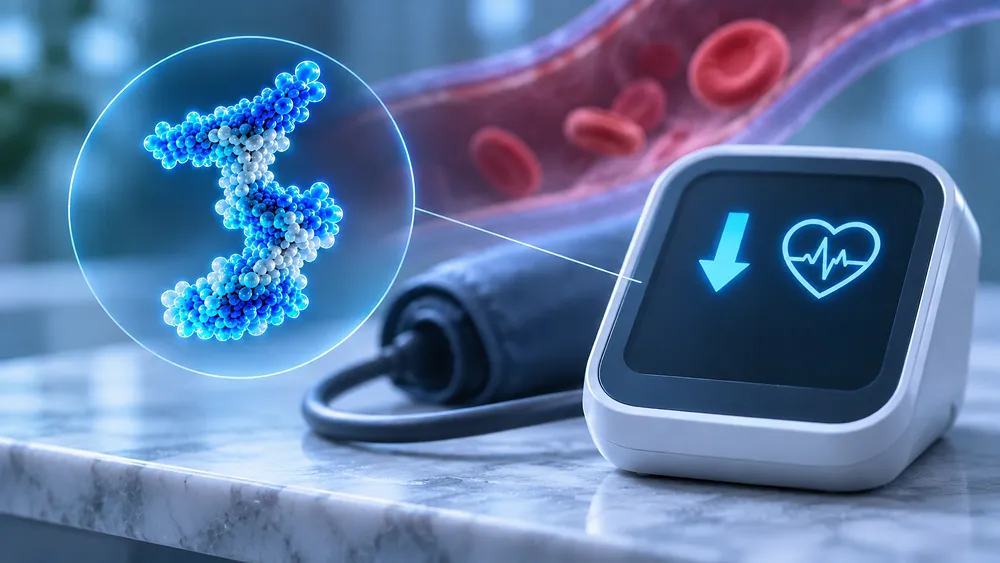
Low blood pressure was one of the side effects that stood out in the trials. In TRIUMPH-1, the largest Phase 3 trial of retatrutide with published results, it was reported in 2.7%, 5.3% and 8.8% of participants on the 4 mg, 9 mg and 12 mg doses over 80 weeks, against 0.9% on placebo. The trial counted hypotension, orthostatic hypotension (a drop in blood pressure on standing) and decreased blood pressure together.
- It was more common in people already taking blood pressure medicines: 11.3% of them on 12 mg, against 1.3% on placebo. Among those not taking such medicines, the figures were 7.0% and 0.6%.
- Dizziness was reported in 12.0% of participants on 12 mg, against 3.1% on placebo.
- Mostly mild or moderate, and judged nonserious. That is how the investigators described these events.
- Blood pressure medicines were often scaled back. The intensity of blood pressure treatment was lower at week 80 than at the start in 14.0% of participants randomized to 12 mg, against 2.6% on placebo.
These figures come from the TRIUMPH-1 paper, published in the New England Journal of Medicine in September 2026 and updated in October, and its supplementary appendix.
Why Blood Pressure Falls on Retatrutide
On average, retatrutide lowered blood pressure, which is usually counted as a benefit for people with obesity. In TRIUMPH-1, participants started with an average systolic blood pressure of about 127 mmHg, and over 80 weeks it fell by 7.6, 9.8 and 10.4 mmHg on 4 mg, 9 mg and 12 mg, against 1.9 mmHg on placebo, counting everyone randomized. That effect, and what it may mean for heart health, is covered in retatrutide and blood pressure.
Low blood pressure as a side effect is a separate measure: it counts participants who reported hypotension, orthostatic hypotension or decreased blood pressure as adverse events. The TRIUMPH-1 paper does not say what caused individual cases, but reports that they were more common in participants taking blood pressure medicines. The labels of two approved drugs in the same class, tirzepatide and semaglutide, note that some of their cases occurred together with gastrointestinal side effects and fluid loss or dehydration.
Low Blood Pressure and Dizziness in TRIUMPH-1
TRIUMPH-1 randomized 2,339 adults with obesity or overweight and without diabetes to retatrutide or placebo for 80 weeks. The table shows the related findings.
Both low blood pressure and dizziness became more common as the dose rose; the investigators wrote that they "appeared to be dose-dependent." Low blood pressure was among the adverse events of special interest that were more common on retatrutide, together with dysesthesia and injection-site reactions, and the investigators described these events as mostly mild or moderate and judged them nonserious. The paper does not report how many participants stopped treatment because of low blood pressure. The other side effects of the trials are covered in retatrutide side effects.
People Already Taking Blood Pressure Medicines
About two in five TRIUMPH-1 participants were taking medicines for high blood pressure when the trial began. The supplementary appendix breaks down low blood pressure by whether they were.
On every dose, low blood pressure was more common among participants who were already taking blood pressure medicines, but it was not limited to them: on 12 mg, 7.0% of those not taking such medicines also reported it. The appendix does not say which medicines were reduced or why. The comparison of medicine changes is also limited by missing data, which were more than twice as common on placebo (27.4%) as on retatrutide (12.0% to 13.2%).
Low Blood Pressure in the Other Retatrutide Trials
In TRIUMPH-2, an 80-week trial in 1,152 people with obesity or overweight and type 2 diabetes, the published report's abstract gives low blood pressure in 1%, 5% and 6% of participants on 4 mg, 9 mg and 12 mg, against less than 1% on placebo. The company's announcements of the other Phase 3 trials, which list only the most common side effects, do not report low blood pressure.
The 48-week Phase 2 obesity trial, published in 2023, reported low blood pressure as an adverse event in 6 of 267 participants on retatrutide and none of the 70 on placebo, and dizziness in 8.1% of those on 12 mg against 2.9% on placebo. Its investigators also wrote that improvements in blood pressure led to at least one blood pressure medicine being stopped in 41% of participants in the combined 8 mg groups and 30% of those on 12 mg, without saying what these percentages are out of.
Blood pressure figures from the other trials, including a 14.0 mmHg fall on 12 mg (efficacy estimand) in the knee osteoarthritis trial, TRIUMPH-4, are compared in the blood pressure article linked above.
How Retatrutide Compares With Tirzepatide and Semaglutide
The US labels of tirzepatide and semaglutide also report low blood pressure and dizziness in their weight-reduction trials. These are comparisons across separate trials of different lengths and populations, not head-to-head results, and while all three sources group low blood pressure the same way, semaglutide's 7.2 mg dizziness figure also includes dizziness on standing.
On these figures, low blood pressure was reported several times more often on retatrutide 9 mg and 12 mg than on tirzepatide or semaglutide, while the placebo rates were all under 1%. Retatrutide 9 mg and 12 mg also lowered systolic blood pressure somewhat more: tirzepatide's label reports falls of 6.6 to 7.7 mmHg at 72 weeks in one of its trials, against 1.0 mmHg on placebo. Semaglutide's label also reports fainting (syncope) in 0.8% of patients, against 0.2% on placebo; the TRIUMPH-1 paper does not report a figure for fainting. The wider comparison of the three drugs is in retatrutide vs tirzepatide vs semaglutide.
Low Blood Pressure and Heart Rate
While average blood pressure fell, average pulse rate rose on retatrutide, peaking at 20 weeks on 9 mg and 12 mg in TRIUMPH-1 and decreasing after that. At week 80 it was on average 1.5 to 2.7 beats per minute higher than at the start, against 0.3 lower on placebo, according to the supplementary appendix. The data are covered in why retatrutide increases heart rate.
What Is Still Unknown
- How low blood pressure fell in the participants who reported it. The paper gives the number of cases and their general severity, not the readings.
- Fainting and falls. The TRIUMPH-1 paper does not report them separately.
- How many people stopped treatment or reduced the dose because of low blood pressure.
- Which blood pressure medicines were changed, and on whose decision.
- Low blood pressure in the Phase 3 trials not yet published in full, which will come with their full publications. Longer-term safety is covered in retatrutide long-term safety.
Why This Page Has No Advice on Blood Pressure Medicines
Retatrutide has no approved label, so there is no approved guidance on monitoring blood pressure or adjusting blood pressure medicines with it; the published reports do not describe how blood pressure medicines were adjusted in the trials, which were run under medical supervision. For approved drugs, that guidance comes from the label and the prescriber. Lilly says retatrutide is legally available only through its clinical trials and that anything sold to consumers outside those trials is illegal, and it warns that illicit products "may contain unknown ingredients, harmful contaminants and impurities." The trial figures above say nothing about what such products might do.
Sources
- Jastreboff AM, Kaplan LM, Davies MJ, et al. Retatrutide, a Triple Hormone Receptor Agonist, for Treatment of Obesity. N Engl J Med. Published September 29, 2026; updated October 22, 2026. DOI: 10.1056/NEJMoa2604169. (TRIUMPH-1)
- Jastreboff AM, Kaplan LM, Davies MJ, et al. Retatrutide, a Triple Hormone Receptor Agonist, for Treatment of Obesity. Supplementary Appendix, Tables S10, S11 and S12. N Engl J Med. 2026.
- Bellido V, et al. The Lancet. Published September 2026. DOI: 10.1016/S0140-6736(26)01861-1. (TRIUMPH-2, abstract)
- Jastreboff AM, Kaplan LM, Frías JP, et al. Triple–Hormone-Receptor Agonist Retatrutide for Obesity — A Phase 2 Trial. N Engl J Med. 2023;389(6):514–526.
- Eli Lilly. Lilly's triple agonist, retatrutide, delivered weight loss of up to an average of 71.2 lbs along with substantial relief from osteoarthritis pain in first successful Phase 3 trial. December 11, 2025. (TRIUMPH-4)
- Eli Lilly. US prescribing information for tirzepatide for weight reduction, sections 6.1 and 14.1. Revised August 2026.
- Novo Nordisk. US prescribing information for Wegovy (semaglutide) injection and tablets for weight reduction, section 6.1. Revised June 2026.
- Eli Lilly. What to know about retatrutide. Last updated September 2026.
Medical Disclaimer: This article is for informational purposes only and is not medical advice. Retatrutide is investigational and is not approved by the FDA for any use. It is not available by prescription, and Lilly says anything sold to consumers under its name outside its clinical trials is illegal. The figures described here are those reported in clinical trials under medical supervision.
Frequently asked questions
Low blood pressure was more common on retatrutide than on placebo in the trials. In TRIUMPH-1, it was reported in 2.7%, 5.3% and 8.8% of participants on 4 mg, 9 mg and 12 mg over 80 weeks, against 0.9% on placebo. The investigators described these events as mostly mild or moderate and judged them nonserious.
Yes. In TRIUMPH-1, 11.3% of participants on 12 mg who were taking blood pressure medicines at the start reported low blood pressure, against 1.3% on placebo. Among those not taking such medicines, the figures were 7.0% and 0.6%, so it also occurred in people without them.
Dizziness was reported more often on retatrutide. In TRIUMPH-1 it affected 5.0%, 8.9% and 12.0% of participants on 4 mg, 9 mg and 12 mg, against 3.1% on placebo. The investigators wrote that dizziness and reported symptoms of low blood pressure appeared to be dose-dependent.
Low blood pressure was reported more often on retatrutide 9 mg and 12 mg in TRIUMPH-1 (5.3% and 8.8%) than in the weight-reduction trials described on the US labels of tirzepatide (1.6%) and semaglutide (1.3%), with placebo rates under 1% in all three. These are comparisons across separate trials, not head-to-head results.